I travel for food, but it’s smells that have the most power to instantly take me back. Every trip has its own mix: eucalyptus and ocean in Northern California, zagara and espresso in Sicily. Science tells us that scent is a strong memory trigger, but of course most holidays’ aromas are irreproducible – they vanish the moment you board your flight home. Except, it turns out, with Sri Lanka. Here, you move from frankincense to fumes. Incense lit in innumerable plant pots mixes effortlessly with the sinister black clouds from the exhausts of ancient local buses.
It’s a lot to take in when you first land. But after a few days, you get used to it. You might even start to enjoy it. It means you’re still in the jungle, still sipping fresh coconut water, still riding waves or at least have the opportunity to. The best days come with elephants crossing the road and views fit for a king. The worst? UHT milk in your flat white (go on, judge me) and a quick tropical rain soak. All in all, manageable.
Like everyone, we left Colombo as soon as we arrived, hopping on one to the famously and painfully slow, screechy, diesel-scented trains to Kandy. In front of us, a German man narrated his life to a visibly tortured French backpacker. He knew the best beaches, the best fish shacks, and knew not just the annual rice yield of Sri Lanka, but also the best way to cook. Across from them, a Russian couple took exactly one break from scrolling their feeds —an obligatory selfie out the train door. An excitable American snapped a photo of Charlie doing the same in which Charlie, inexplicably, has three hands.
What I am certain about
is that Buddha has never
been to Kandy.
Everyone says trains are the best way to see Sri Lanka—and they’re right. They crawl across mountains, hug coastlines so tightly that you feel the ocean spray on your face, and they cost about as much as a samosa, or two if you get tempted by a first class class ticket. Do not, however, let the promise of first class deceive you. After all, you get what you pay for and if you pay little, you get little. The air conditioning rarely functions, toilets are of questionable cleanliness and you are not actually guaranteed a seat. Unless you are a member of the clergy in which case you get a special seat reserved just for you in every carriage. If you are pregnant or disabled or unable to stand for any other reasons – sorry pal, should have gone to seminary or better still, monastery.


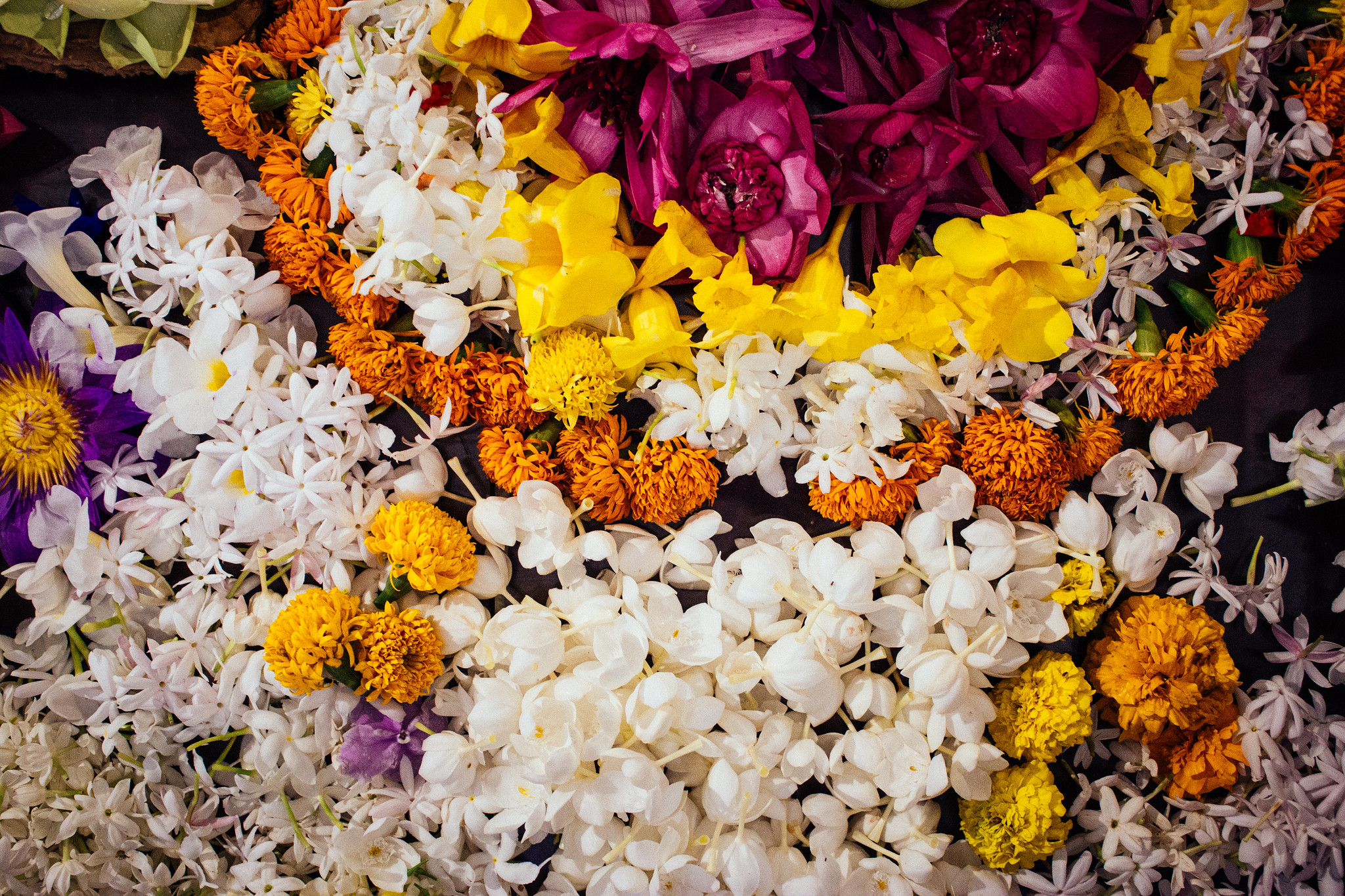
Kandy is a must, the guidebooks will tell you. Its main attraction, the Temple of the Sacred Tooth, is a world heritage site and the most important religious place in the country. Its significance is clear from the impressive size, beautiful lakeside setting and the fact that on the day we visited it was hosting what I estimated to be half of the population of the island. It was an experience like no other: a person on top of a person, mountains of half-decayed flowers everywhere, incense lit in spades and constant rhythmic drumming. Pain is certain, suffering is optional is what Buddha has told us. What I am certain about is that Buddha has not been to Kandy.
Alas, I didn’t leave Sri Lanka because of snakes. I left because of curry.
But head east from the city, and you’ll find a different Sri Lanka – calmer yet wilder: misty mountains, tea plantations and greenery wherever you look. The national parks are, after surfing, probably the top reason to visit Ceylon.We chose Gal Oya, a smaller of the parks and one not on all the ‘must-visit’ lists. We stayed at Gal Oya Lodge. Beyond the four-poster bed and an outdoor shower, which is already my idea of a perfect stay, we were promised no phone signal and no Wi-Fi. This comes highly recommended. The only downside was that I got used to not reaching for my phone so quickly that most elephants evaded my camera lens.
Alas, I didn’t leave Sri Lanka
because of snakes.
I left because of curry.
And yes, you will see an elephant. One casually crossed the road as we were driving on the edge of the park. It very much whetted my wildlife appetite. I spent the rest of the stay hoping to see a leopard – the lodge is home to a leopard conservation research centre. No luck sadly—like all cats, if they choose to be unseen, unseen they remain. What I did see was more snakes than I signed up for. “Only five species are lethally venomous,” said our guide. I did not dare ask how many are venomous enough to leave you with a lasting memory of the encounter but no ability to tell anyone about it.


As a preamble I must repeat that I travel to eat. This is why I will be back in Naples and you will never see me in Havana again. I primarily chose Sri Lanka to feast my eyes on the jungle and feast the rest of me on curry. A classic example of careful what you wish for.
My expectations were high – curry is a universe of food and one that I wholeheartedly subscribe to. “Rice and curry” might sound like a rather vague national dish, but I was well up for it. What I did not anticipate was that every meal will entail rice and curry. It is, I must tell you, always referred to as ‘rice and curry’. You will confuse absolutely everyone if you mess with the standard word order and attempt to get ‘curry and rice’. I made this mistake once and the waiter asked me to repeat myself three times before he exclaimed ‘Ah! Rice and curry! Of course!’
Take solace in the fact that
the locals rinse them
like it’s going out of fashion
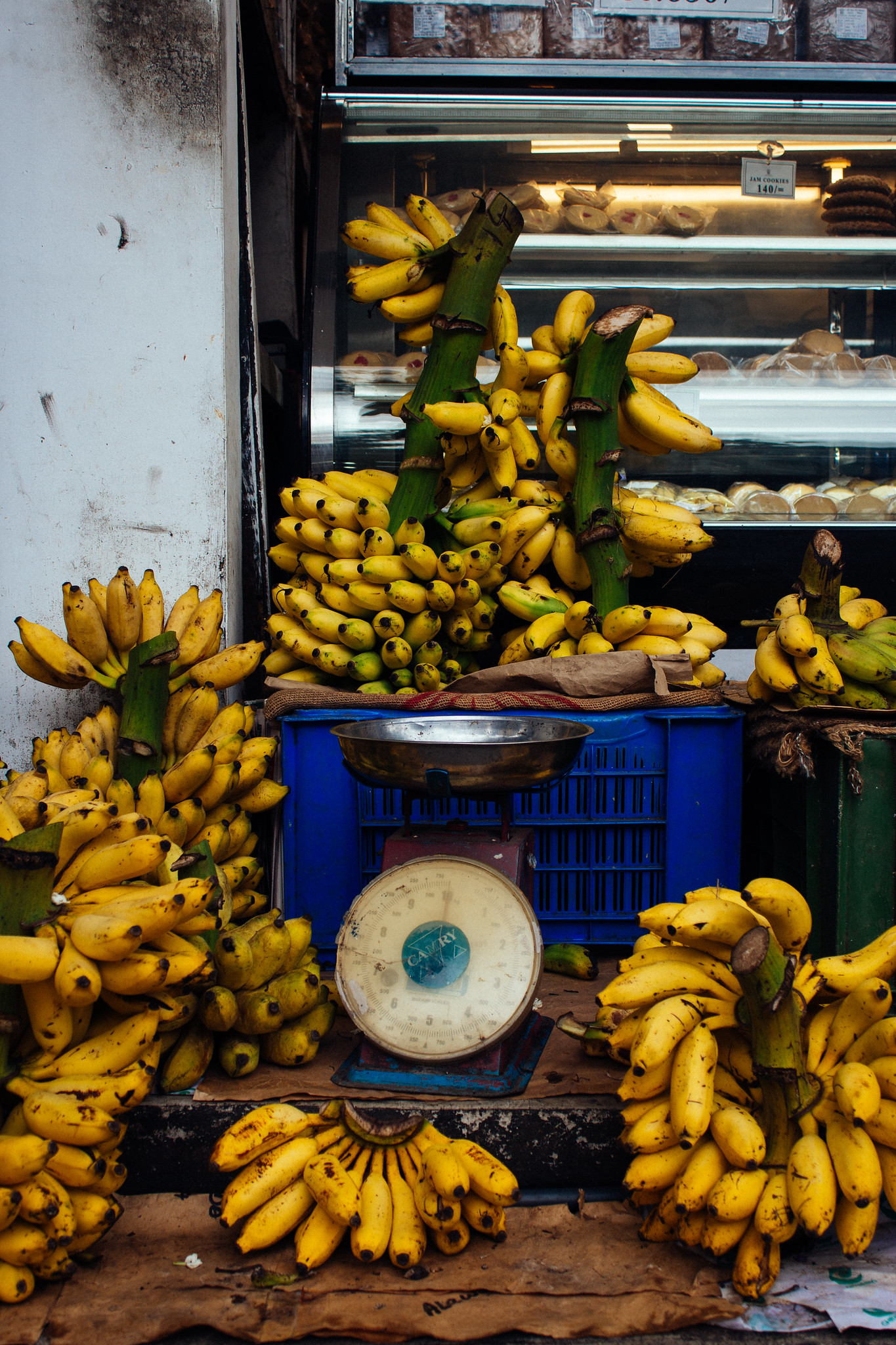
All Sri Lankan curries are similar; they are a coconut-milk-rich curry-leaf-laced feast. A dinner feast and a breakfast feast. Sometimes they are a lunch feast too. After a few days I mixed it up a bit: aubergine curry, banana leaf curry, fish curry, mango curry. Eventually however, curry fatigue set in. In some places respite arrives in the form of kothu – a dish of roti chopped to resemble pasta and then dry fried with, you guessed it, curry sauce. These days the cool kids add mozzarella to it. Bizarre. Delicious. Along the coast, fish is king—caught fresh, grilled simply, served seaside. The best. And fear not, you can ask the cook to skip the curry.
The street food deserves a separate article but I only tried the vegetarian options so writing it would feel insincere. I can however write an entire article about passion fruit juice, which by the end of the trip must have run in my veins due to sheer quantities I consumed. There was also mango juice, papaya juice, pineapple juice, rambutan juice and all manner of your five-a-day in a liquid form. If I ever do move to the tropics it will be for the passionfruit, not for the weather.

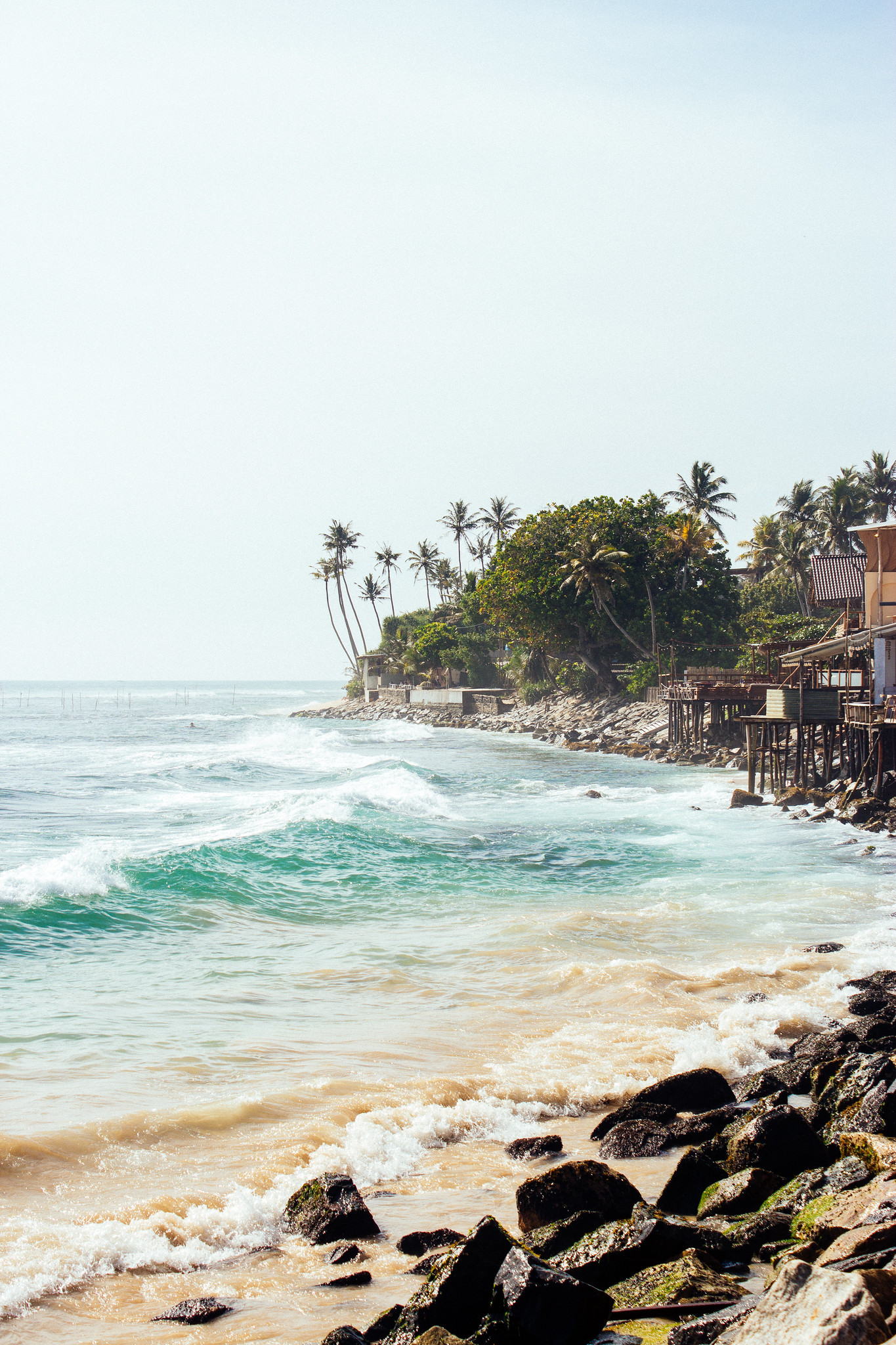
And then, there’s the ocean. You must see it. Surf it. Smell it. The southern coast is the paradise they promise: white sand, swaying palm trees, turquoise waves turning to gold at sunset. Try not to get too annoyed with the impossibly good-looking, attractively tanned and obnoxiously young people who hog this part of the country like it belongs to them, whether they arrived from Shanghai, Stockholm or Sochi. Take solace in the fact that the locals rinse them like it’s going out of fashion – welcome to the part of the country where bad coffee costs £4, rice and curry £16 per plate and a negroni (!) £12. Where there is demand, there will be supply. But the ocean is stupendous. Order a passion fruit rather than a negroni and enjoy the views from the very narrow but very beautiful beach in Ahangama, mere metres from the busiest road on the coast.And then take in the smell again—that mix of spice and smoke, coconut and diesel. Unforgettable.

P.s I did what everyone does – I wrote about the jungle and the ocean elegantly ignoring the largest elephant in the room (pun not intended). Sri Lanka’s civil war tore the country to shreds for decades but the signs and scars of it are not immediately visible. If you however talk to your guides, tuk-tuk drivers or roti folders you quickly realise that the memories are fresh. Although the conflict officially ended in May 2009, the anxiety and distrust remain. Our guide in Gal Oya, a man my age, told us about his parents taking separate buses to town to avoid a Tamil Tiger bomb attack killing them both and orphaning the children. If this does not send shivers down your spine perhaps the fact that the north of the island remains contaminated with 1.6 million landmines will. The war feels eerily absent when you travel around the country. I have seen no plaques commemorating the fallen, I read no references to it on any information leaflets and overheard no conversations about it. I do not feel qualified to tell you much more, but if you want something deeper, darker and closer to the heart and soul of the country, I recommend these novels: ‘The Seven Moons of Maali Almeida’ by Shehan Karunatilaka and ‘A Passage North’ by Anuk Arudpragasam.
 Hedonist Manifesto